


» Your weekly expert guide to Substack and writing—with leading Substack Strategist Sarah Fay

Picture a “writer.” Whatever image just came to mind (not necessarily the one above), stay with it.
Notice if you have a particular response to it, something along the lines of That’s me or That’s not me. Even if you’re a professional, award-winning, bestselling author, you may respond me, not me, depending on the day and your mood.
» Below, I show you why thinking about writing as a job or task like any other will serve you very well on Substack—plus, my 5 favorite craft tools for Substack writers who don’t identify as “writers” and those who do.
Substack: The home for great writing?
In the beginning, Substack’s tagline was “the home for great writing.”
It stayed that way for years until it (suddenly—to us) ushered in features like images, audio, video, and podcasting (to much consternation) and became “an economic engine of culture.”
From the company’s About page:
“We started Substack because we believe that what you read matters and that good writing is valuable—and as the platform has evolved, we’ve come to expand that view to include all forms of cultural work.”
Though Substack has opened its arms to all, many people feel intimidated by the platform. (Some “writers” have, sadly, harassed people for not being “good enough” to write on here, including celebrities like Lizzo.)
What it means to be a “writer”
Part of the problem is that what defines a “writer” is often unrealistic, inaccurate, and melodramatic.
Writers are thought to be endlessly imaginative to the point of living in a state of constant (inane) creativity. We supposedly “love language.” (I don’t even know what that means.) In Lit Hub, Karen Bender wrote that writers “want to grab the world and wrestle it to the page.” (Really? I’m a writer down to my toes and my tax forms, and I’ve never felt this. Ever.)
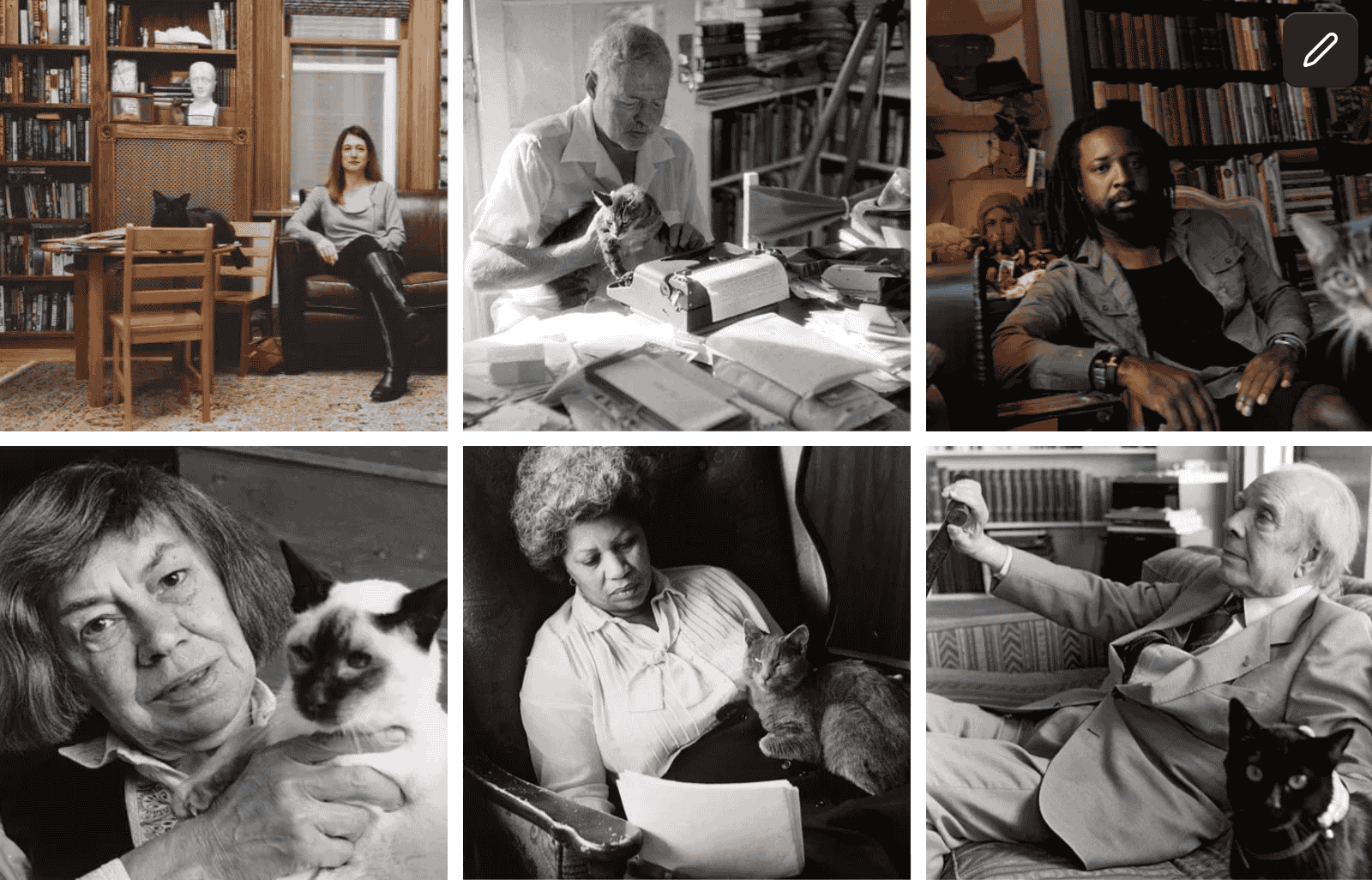
We’re supposed to muse. And brood.
But writing is a profession like any other. As the Colombian novelist and journalist Gabriel García Marquez told The Paris Review, it’s “nothing but carpentry. Both are very hard work.”
And what does “great” writing even mean?
As someone who’s reviewed books for The New York Times, et al. and has a PhD in literature and has read every single book ever published (kind of), I can tell you that “great,” “good,” and “bad” are empty adjectives. They hold no objective meaning. What’s great to you isn’t great to me.
Go ahead: Think of the greatest book ever written. I guarantee we didn’t just think of the same book.
That doesn’t mean writing is easy
Wait, actually, writing is easy.
» Creating a piece of writing that resonates with and maybe even changes the lives of complete strangers is mindbendingly difficult.
Couple that with the fact that we’re being read in email (newsletter) and online (blog), and it’s all a muddle.
Imposter syndrome be gone!
It’s all a muddle.
So enter into writing on Substack as an experiment of you finding your way as a writer on this strange platform and in people’s inboxes and take it seriously enough to work on your writing, and you will grow, and from that, grow your platform and bank account.
But you need the skills.
Below are five simple techniques to create a deeper connection between you, your reader, and your writing.
The AI elephant in the room: AI-produced/manipulated writing isn’t the kind of writing I do or teach. I know a lot about AI and LLMs and what I’m not missing. Still, if you like to use AI, you might find what I teach valuable, but you’ll be missing out on this amazing thing we call the writing process. It’s awesome. You should try it :)
5 of my favorite craft techniques for Substack writers who don’t identify as “writers” (and those who do)
Join thousands of paid subscribers to access these 5 simple craft techniques—plus how to grow on Notes with the new algorithm, upcoming workshops and summits on how to turn followers into subscribers (and get off social media for good). You and your Substack are worth it.
