

What You Really Need to Know About Your Substack
Spoiler: The medium is the message

I have some very exciting news for us, but I have to wait until it’s official. Let’s just say that we may be doing a very cool project together—epic—and I can’t wait.

I love this photo. The black turtleneck. The determined expression. The eight rotary phones along the wall behind him. The pen in his hand. The two books open in front of him, one with an image of a knight from the Middle Ages.
This is Marshall McLuhan, the Canadian philosopher, visionary, and media prophet.
(I’ve written about McLuhan before, but not in a while. His work is that important to us here on Substack that I’m sharing about him again.)
His most famous theory is The medium is the message.
How our posts reach our subscribers influences their experience of them—via a physical newspaper, a TV screen, or a social media platform on a smartphone.
That experience determines whether they stay subscribed (which is the best way to grow, build a platform, etc.) and pay.
We interact differently with a post if we read it online or in an app. Emails have an effect on us all their own.
We’re read in three places:
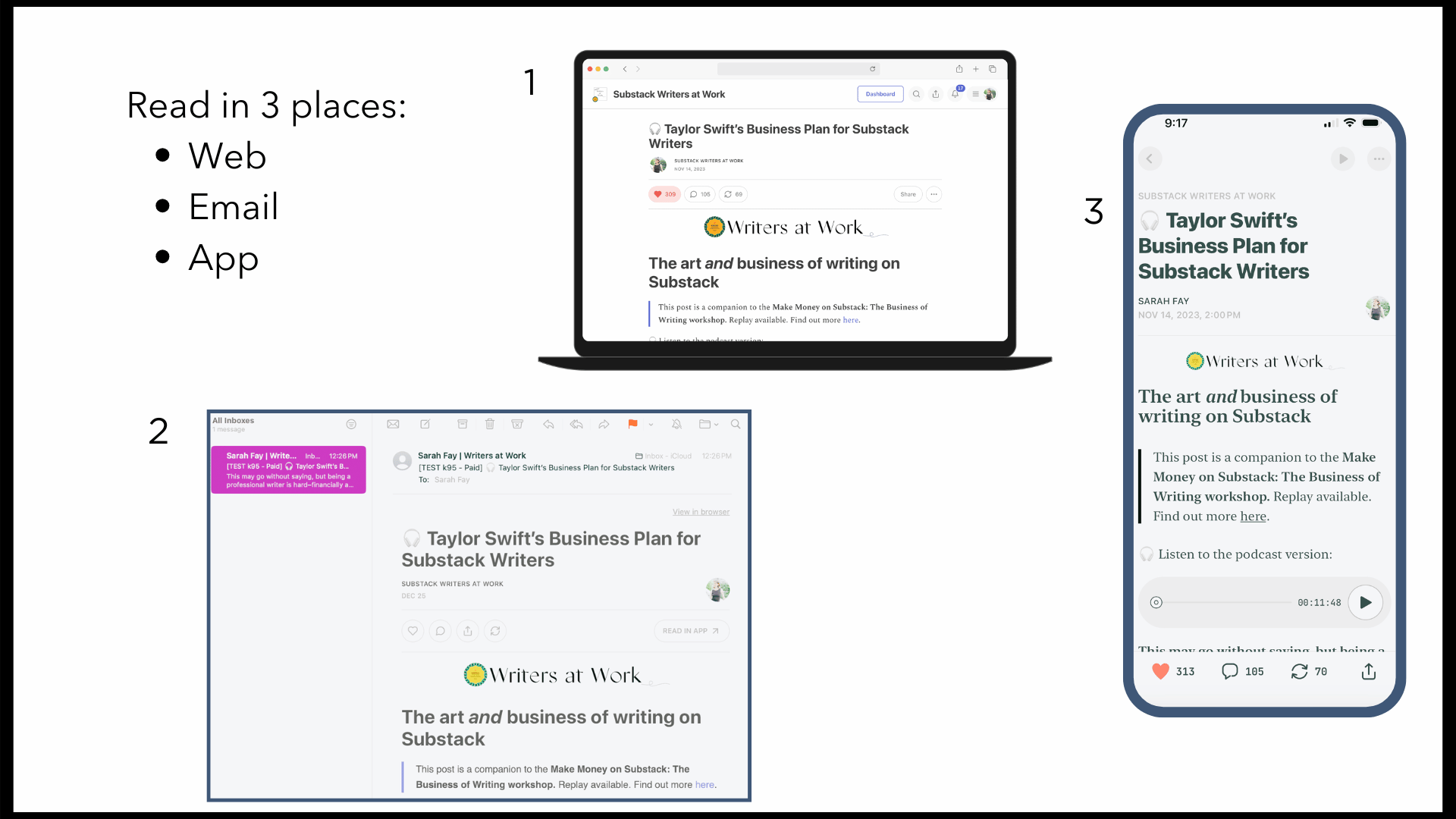
Being able to write and design your posts with this in mind will determine—at least in some ways—whether you grow the platform and readership you want and/or get paid subscribers.

Most of us are being read in email—about 90 percent, from what I’ve seen with my clients. Some are being read in email and the app.
Most of our posts read as blogs/articles, which isn’t a bad thing, but we need to think more about how they function as emails. As Austin Kleon said on the Substack Live! Podcast: it’s a news-letter.
What to consider if your posts are read mostly via email:
Openings (this is a much larger conversation, but here are some things to consider):
You’re not writing a blog—not solely. Your post is showing up between an email from Amazon saying their package wasn’t delivered and one from their boss saying they’re fired (possibly). One of my clients insisted on opening his posts with compelling, way-too-graphic scenes from his experiences with mental illness. These would have worked fine if they’d come later in the post. Needless to say, his open rate was quite low.
Don’t start by selling. I mean, you can, but don’t your subscribers get enough of that?
Address your subscribers with a salutation. This won’t be right for everyone, but a Hello is nice.
Be personable, not precious. I see so many Substack writers make the mistake of pretending they’re writing for a literary journal. We’re not. Substack is a genre all its own, and that ain’t it.
But avoid me, me, me. Essayists, this is where the craft of writing on Substack is crucial. Gesture toward your reader first.
***I’ll be going live this Thursday with examples of each.
Make it easy on the eyes! Short paragraphs work well. Use dividers—in the upcoming images post, I’ll share how to use them. I love how George Saunders uses them—simple, elegant, guiding us through the post/email.
Easy on the buttons. Just one. One type per post. Ask them to share your Substack or upgrade to paid. Choose your buttons wisely and don’t put them in the middle of your post because it’s annoying.
What to consider if your posts are read in email and on the app:
Images. If 90 percent of your subscribers read you in their inboxes, should you use images at all?
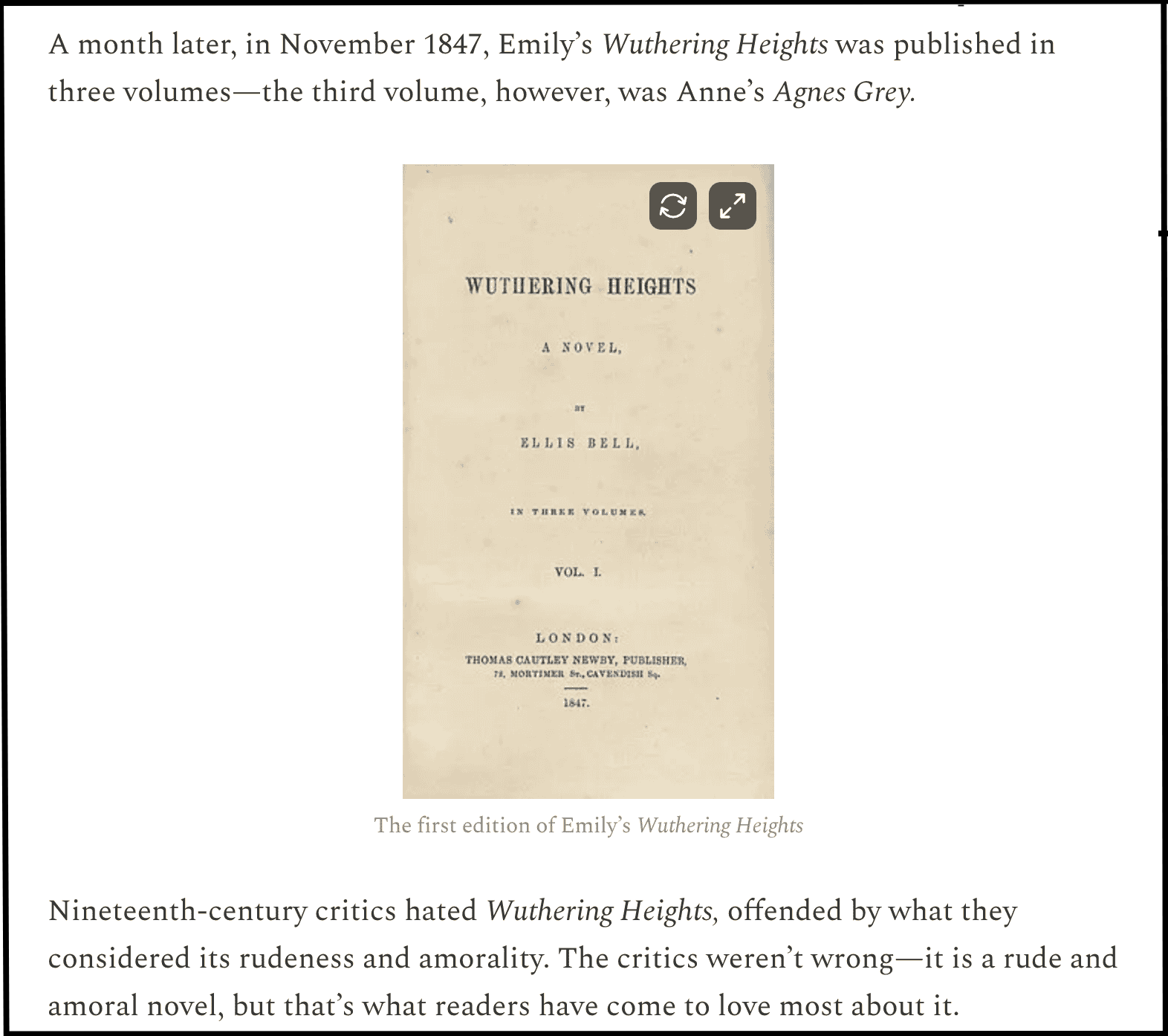
Well, people have short attention spans and images guide your subscribers through your posts. And they look great on the web and the app. These are from Jillian Hess’s Substack Noted—Jillian does real research, bringing us archival materials we wouldn’t otherwise see:
Things to think about with images:
Non-compressed images without alt text make it more likely your post will end up in their spam folder.
They can make an email load slowly or not at all.
How to find out where you’re being read:
If you check your stats, you’ll discover how your subscribers are reading you—email, app, or web.
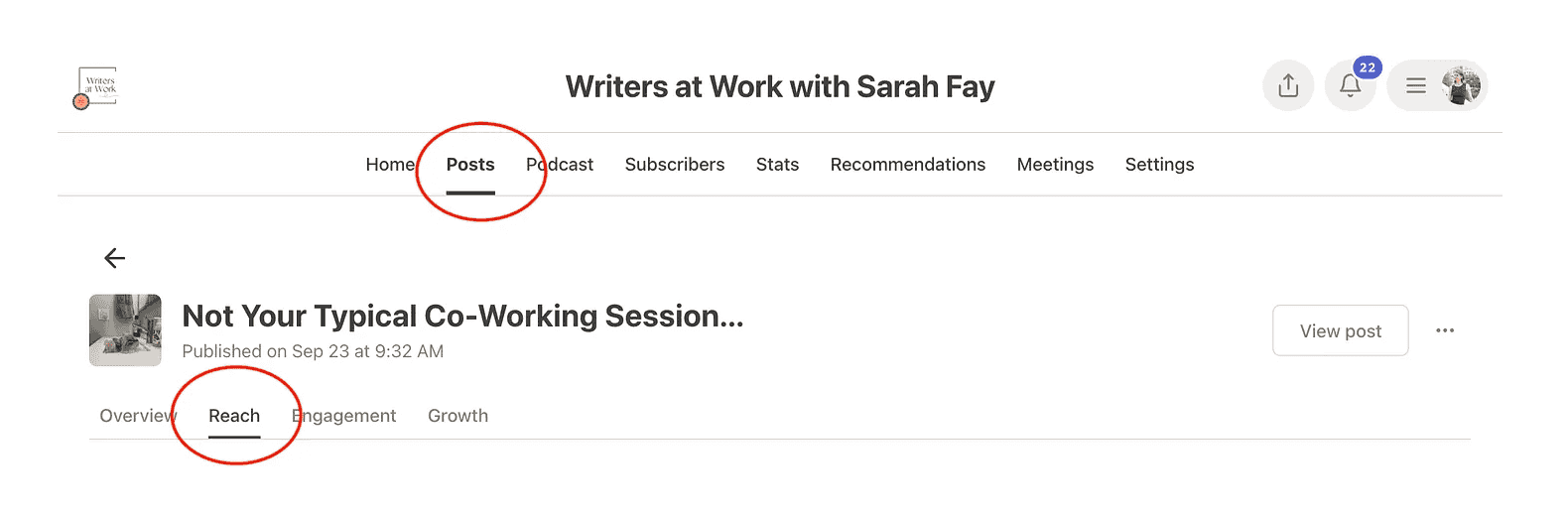
Click on the three dots next to any post more than two weeks old (don’t judge your posts too quickly—it’s email, not social media, and people often wait to read us).
Click View stats > Reach.
Look at Traffic. Your traffic sources tell you how to communicate with your subscribers. Most of us will be a mix of email and the app. Some of us are almost pure email.
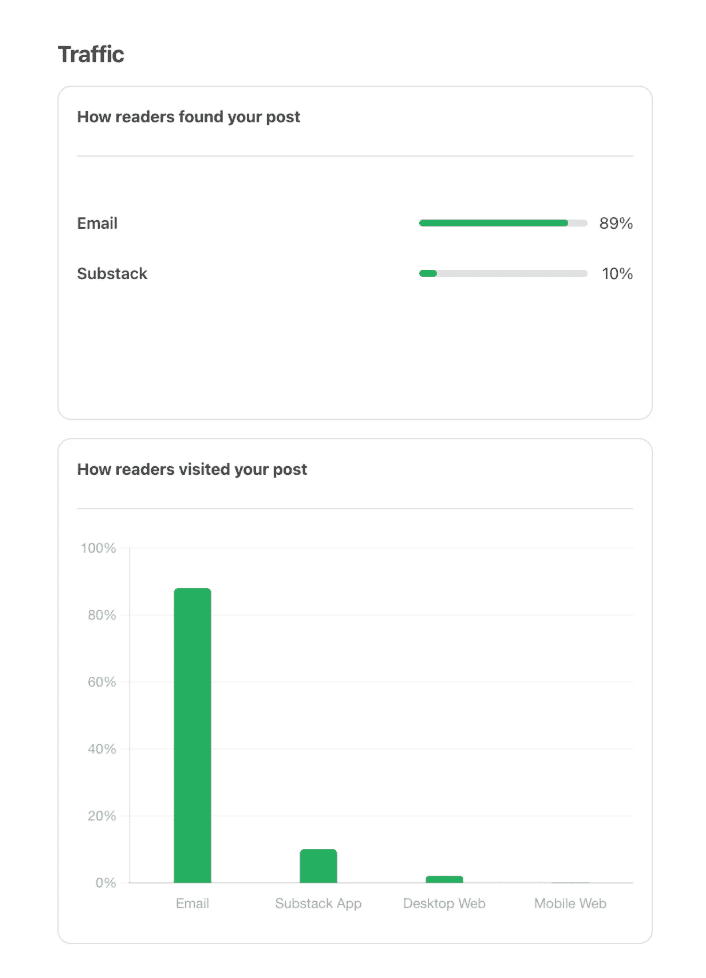
It will vary post to post, but knowing this will give you a sense of how you’re speaking to your subscribers.
Experience your posts before you send
Preview your posts in email and send a test to yourself so you experience how your subscribers feel when they get your newsletter.
On your post draft, go to the upper right and click PREVIEW>SHARE.
What to consider for your posts if you’re read in the app and via email and on the web?
This is actually what we’re all doing all the time. Three mediums and in some ways, three messages. This is part of what makes writing on Substack so challenging—and exciting.
Until next week…
Your Substack Strategist and biggest fan,
Sarah

Writing on Substack Live! Openings that make people open, 2/26 at 2:05 PM CST

SW@W homepage | Premier Membership homepage | Notes Boost Challenge | Manage your subscription | Work with me 1:1
This post made me think it would be interesting to see you open a few posts on a live call and just make off the cuff observations… or have you already done this and I missed it?
Very helpful, Sarah. I need to check this. Thanks for the tip about alt text. I’ve gotten lazy about that.