

Diary of a Substack Growth Strategist: What matters most
What matters most in your Substack post, how Substack is going other level, and how this one approach to Notes will eliminate your frustrations with stalled or no growth

Your behind-the-scenes look at what’s happening and working on Substack—with the platform’s leading Growth Strategist, Sarah Fay. The good stuff is below the paywall.
As a consultant, I’m behind so many Substack dashboards week after week and use this space to tell you what I’m seeing on the platform and how I’m advising people in real time. As someone who’s written for The New York Times, The Atlantic, et al., I think like a journalist and also use this space to report on the platform to keep you in the know. So join me for Diary of a Substack Growth Strategist—based on what I’m seeing each week with my clients and what’s happening on the platform. Most of the good stuff is below the paywall.
This week: Claude + Substack, how Substack is going other level with new features and updates, and how this one approach to Notes will eliminate your frustrations with stalled or no growth, and more

Client session spotlight
The main thing I’m telling clients over and over and over again right now is that the Substack Notes algorithm is pretty easy and delightful if you follow what I’ve outlined for Notes Summer (!).
If you feel like Notes doesn’t work for you or that you aren’t “good” at Notes. You don’t need to be!
Just follow my guidance on the Notes algorithm and only post the 4 types of Notes that go viral and follow this 7-day Notes schedule.
And this weekend, take just eight minutes to read my (short but comprehensive!) Notes guides:


What’s out
I’ve had a number of clients reach out to me and say that finally, finally, one of their posts has gone viral. In every case, it’s because of one thing.
Titles. Are. Everything.
Our titles function as headlines and subject lines, which makes them challenging.
And if you’re using AI, you’re missing out on an opportunity to increase your open rates and keep your subscribers, so you can grow and convert paid subscribers. If people aren’t opening your emails, they don’t see why they should pay and how amazing you are.
A great title:
Isn’t clickbait. (Clickbait works but also erodes trust.)
It’s not vague, i.e., supposedly meant to spark curiosity, which doesn’t work at all.
Capitalization guidelines vary.
It’s not written by AI, but the SEO title is.
If you want an example of someone who writes great headlines/subject lines, subscribe to Jocelyn Lovelle of Hello Beautifuls for the experience of having hers arrive in your inbox.
Here’s the excellent advice Jocelyn gave in our most recent Premier call:
Work hard on them.
Try pulling lines or phrases from your post.
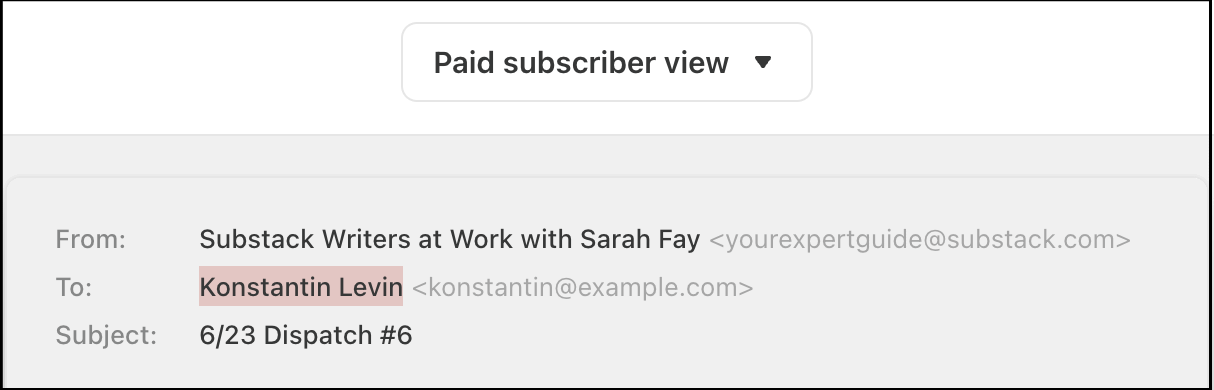
Test many different versions and send a preview of every version to yourself and see which one made you want to open and read. To send your posts to yourself before sending: on your post → Preview (upper right of the screen) → Share. (And if you’ve ever wondered who the example sendee Konstantin Levin is, he’s a character in Tolstoy’s Anna Karenina.)
I also like NPR’s checklist. A great headline should:
promise—but not overpromise—something
be specific
be easy to understand
lead to a reaction
capture the tone of the article
explain why it matters
Your headline doesn’t need to do all of these—just one or two will put you in the top-1 percent of Substack titlers.
How to do this on your next Substack article:
Come up with any title. Let it be really, really bad.
What does it promise? If it doesn’t promise anything, revise it so it does.
Is it specific? Is there somewhere you could make it more specific?
Is it easy to understand?
Email a preview to yourself. When you saw it, did it lead to a reaction?
Or try this:
Go to your post and pull a line from your post that captures the tone of your article or write a headline that explains why your post matters.
Let it be verbose. Then whittle it down.
What’s in
Thanks to Claude Code, which assists engineers in running code, supercharging their output, Substack is offering new features and updates at lightning speed (relatively speaking). Note: The surest way not to grow on Substack is to try to know and do everything. I’ve included links for your convenience, but there’s no need to pursue every one.
Less important but nice to have:
The ability to schedule chat threads
Text colors (I’ve requested the ability to use brand colors), highlighting
New fonts (go to your publication Dashboard → Website editor → Posts → Fonts)
Important and great to have:
New category! We haven’t had one of these since Film, but we now have Home & Garden.
Better podcast data with tracking prefixes.
Better Lives with the option to see only questions (Live screen → upper right).
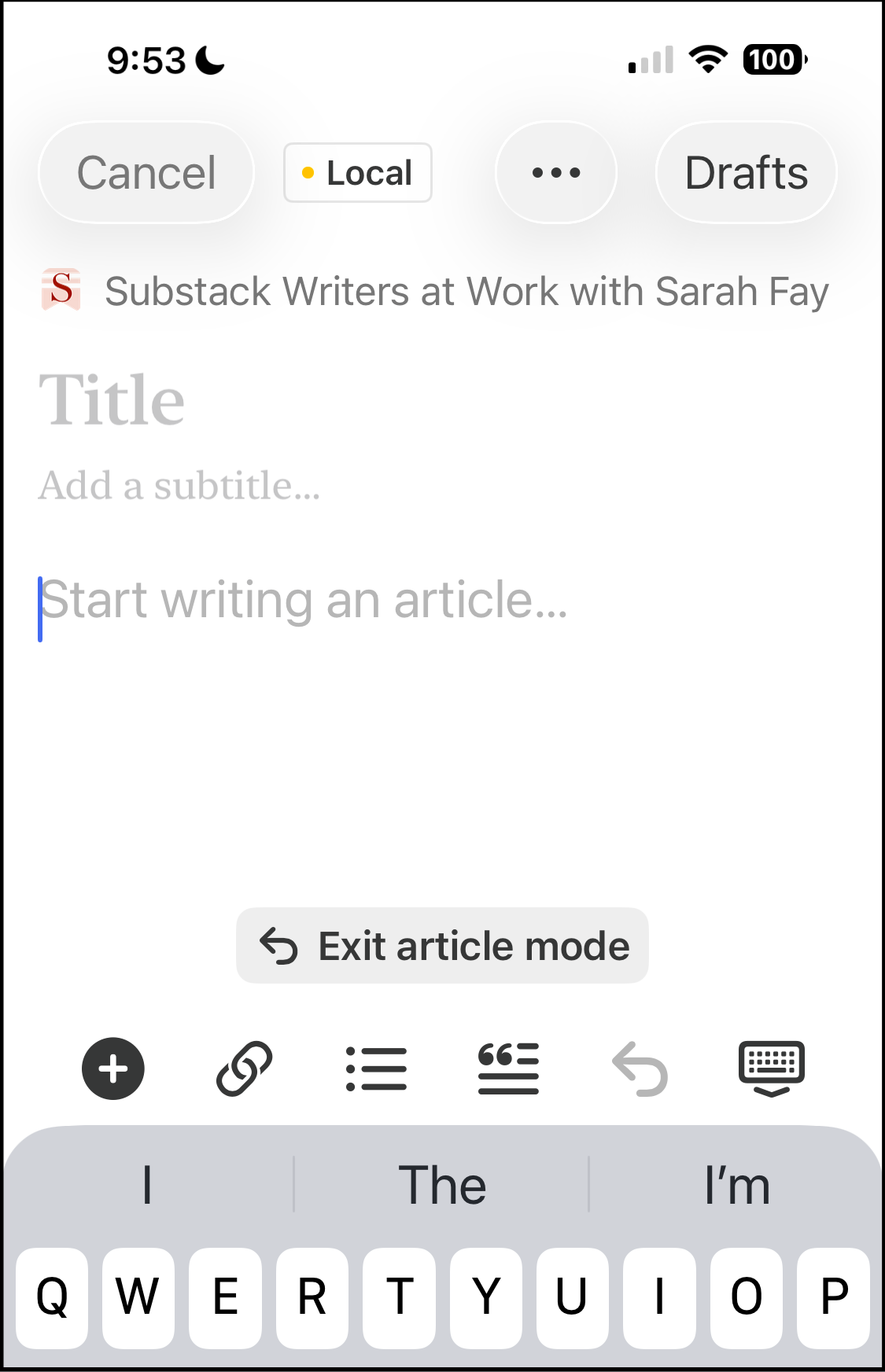
The ability to write articles on the app, and now your drafts will save across devices.
The paid subscriber opportunity you’re missing (and which is coming soon)
I usually don’t write about features that are in beta because they can stay there for months.
But these four are worth knowing about; they will transform how we think about and convert paid subscribers and substantially increase our ability to make money on Substack:
Sections within posts to send specific messages to free, paid, and founding tiers.
Drip campaigns to nurture new subscribers.
Subscriber tags and segmentation, which make paying for email providers like MailerLite or MailChimp far less attractive.
Perks: a way to bring digital products as a clear offering to your paid subscribers and another way to convert.
I have no idea when these will be rolled out for everybody, but I’ll be taking you through how to integrate these into a paid strategy for 2026.
All my best,

P.S. In the comments: Share your most popular post title (check top posts) or the one you like best.

For those of you building or growing your business, my How to Use Substack to Build (or Fuel) a 5- or 6-Figure Business 2026 Intensive is available now.
Join this week’s Notes Boost Community or our paid-subscriber 24/7 Substack Help Chat.

SW@W homepage | Premier homepage | Substack Starter Pack | 24/7 Help Chat | Manage your subscription | 1:1 Strategy Sessions
I love Jocelyn's advice, Sarah! Most of my titles come from phrases within the body of the article/essay itself. They seem to jump out at me. :) Glad to hear this is what others are saying works well for titles. I do sometimes ask AI to help me come up with title options when I can't think of anything great, and I'll tinker with some of the suggestions until I come up with something I really like.
Thank for the information